


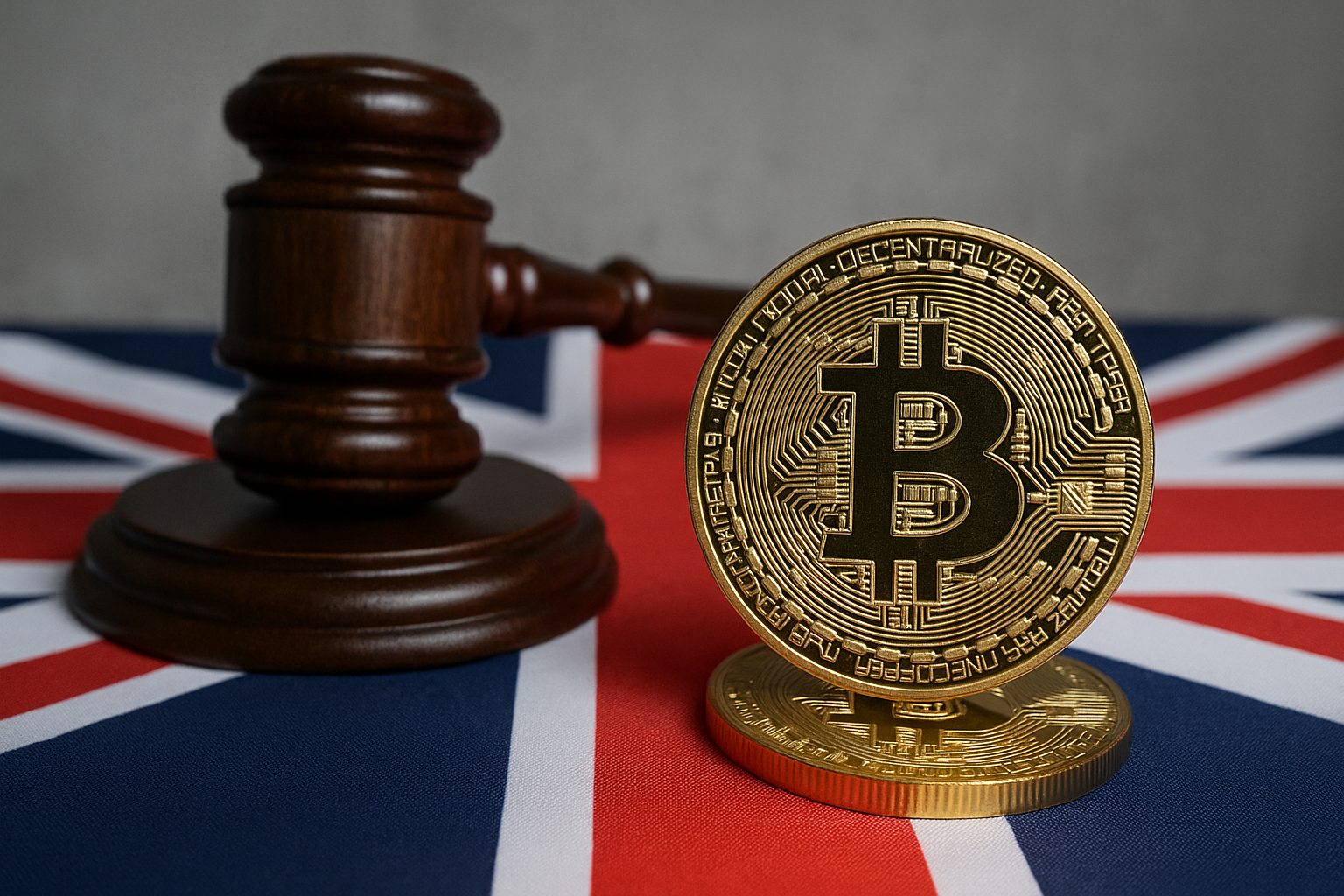
- UK regulation now formally acknowledges digital currencies as private property below new laws.
- The Property Digital Belongings Act provides courts clearer guidelines concerning possession and asset restoration.
- The growing adoption of cryptocurrencies has prompted the UK to strengthen authorized readability on rights to digital belongings.
The UK has made main modifications to how digital belongings are handled in its regulation, confirming that cryptocurrencies and different digital tokens qualify as private property.
This replace turned official this week when the Property Digital Belongings Invoice obtained Royal Assent within the Home of Lords, with Speaker John McFaul asserting that King Charles had formally given it his assent.
The transfer comes as cryptocurrency adoption continues to extend throughout the nation and courts resolve digital asset disputes and not using a clear authorized framework.
By enshrining this precept into regulation, the UK goals to scale back uncertainty for customers in relation to proving possession, recovering stolen belongings, and coping with digitally held belongings throughout chapter or inheritance proceedings.
UK provides clear authorized standing to digital belongings
Till now, British courts have acknowledged digital currencies as property solely by widespread regulation. That’s, the judges had been reaching their conclusions based mostly on earlier selections relatively than particular legal guidelines.
The brand new regulation follows a 2024 suggestion from the Regulation Fee of England and Wales that digital belongings must be handled as a brand new type of private property as a result of they don’t match neatly into current classes.
Private property within the UK has historically been divided into two teams. One is “issues in possession,” which refers to bodily items, and the opposite is “issues in efficiency,” which refers to enforceable rights similar to money owed and contracts.
Digital belongings fall between these definitions.
They exist electronically, will be transferred like property, and are utilized in monetary techniques, however they don’t match completely into one class.
The invoice clarifies that digital or digital gadgets can nonetheless be acknowledged as property even when they’re neither bodily objects nor legally enforceable money owed.
The Regulation Fee warned that uncertainty concerning the suitability of digital belongings may complicate court docket selections, significantly when resolving disputes over possession or loss.
Elevated adoption strikes UK in direction of stronger guidelines
The brand new regulation types a part of a broader push to create a structured framework for digital belongings.
The aim is to strengthen client safety whereas fostering innovation in digital finance.
Adoption continues to develop. Late final 12 months, the monetary regulator reported that round 12% of UK adults held cryptocurrencies, up from 10% within the earlier survey.
This improve signifies that extra customers are partaking with digital belongings, making authorized readability a key a part of future coverage planning.
By recognizing cryptocurrencies as private property and making ready broader laws, the UK goals to assist the digital economic system whereas giving customers a greater understanding of their rights.
This transformation is predicted to form future business practices and enhance how courts interpret disputes involving blockchain-based belongings.