


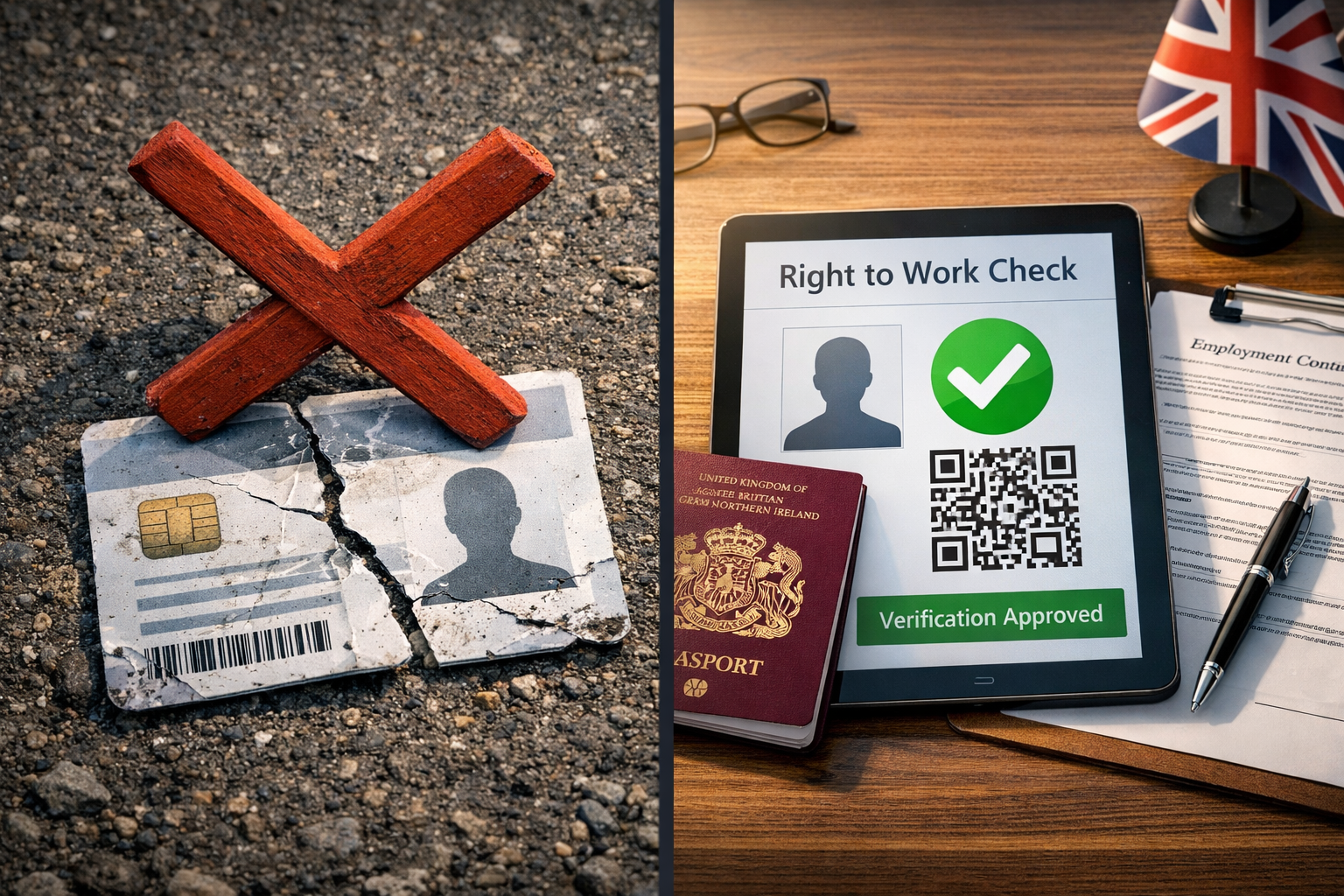
- Virtually 3 million individuals have signed a parliamentary petition opposing the digital ID card mandate.
- Digital labor rights checks will stay necessary beneath the up to date coverage strategy.
- A UK digital ID scheme is predicted round 2029 and shall be supplied as an choice alongside digital options.
Prime Minister Keir Starmer’s British authorities has scrapped plans to require a central digital ID for staff and backed away from proposals that might change the best way staff show their proper to work.
The unique plan would have required staff to make use of government-issued digital credentials slightly than counting on conventional paperwork equivalent to passports.
The reversal follows months of criticism from politicians and civil rights campaigners, and a big public response questioning whether or not entry to jobs ought to depend upon a single centralized system.
Critics warn of surveillance and information safety dangers
Proposals to make digital ID obligatory have sparked a backlash from opponents throughout political traces, together with British MP Rupert Lowe and Reform Britain Celebration chief Nigel Farage.
Civil liberties teams and activists additionally expressed considerations about how centralized identifiers could possibly be used over time.
Opponents warned that elevated state surveillance of the general public might result in an “Orwellian nightmare”.
One other main concern was that centralizing delicate private information might create a single “honeypot” weak to hacking and exploitation.
Critics additionally pointed to the danger of mission creep, the place a system launched to confirm employment might step by step broaden to different areas equivalent to housing, banking and voting.
Strain from petition forces coverage discount
Public resistance to digital ID mandates has emerged via formal political channels.
Almost three million individuals have signed a parliamentary petition in opposition to digital ID playing cards, making it troublesome for ministers to disregard the problem.
Lowe celebrated the coverage change in a video posted to X, saying he took break day to “drink an terrible lot of booze to rejoice the repeal of the digital ID mandate.”
Mr Farage additionally supported the rollback, calling it a “victory for particular person freedoms in opposition to a horrifying authoritarian authorities”.
Digital proper to work checks will proceed to be required by the federal government
Plans to require digital ID credentials have been scrapped, however digital right-to-work checks will stay necessary, officers stated.
Which means that despite the fact that governments are now not constructed round a single authorities ID system, they continue to be dedicated to sustaining employment verification via digital processes.
When the UK’s digital ID system launches round 2029, it’s anticipated to be voluntary slightly than obligatory.
It is not going to be the one authorized path to show work eligibility, however shall be supplied alongside different digital documentation.
Digital Euro, EU Id and Crypto Privateness Debate Returns
The UK’s partial rollback has additionally affected broader discussions about digital governance methods, together with central financial institution digital currencies and the European Central Financial institution’s Digital Euro mission.
In these debates, civil society teams and a few lawmakers have argued for strict privateness ensures slightly than methods that permit for widespread traceability.
On the similar time, the European Union is working by itself digital id framework and digital euro, exploring privateness safety designs.
One strategy entails using zero-knowledge proofs, which permit residents to show attributes equivalent to age or place of residence with out revealing their full private data.
These designs join decentralized id instruments and privacy-preserving blockchain applied sciences equivalent to zero-knowledge authentication methods and privacy-enhancing sensible contract buildings.
The purpose is to attenuate the quantity of non-public information uncovered or saved in a single place whereas supporting compliance.
Alongside decentralized id protocols, privacy-focused cryptographic instruments proceed to achieve traction, equivalent to privateness cash equivalent to Zcash (ZEC) and Monero (XMR).
Curiosity in these instruments continues as regulators enhance oversight of DeFi and take into account id verification of self-hosted wallets.
The US Treasury’s proposed DeFi ID framework, together with a renewed give attention to privateness tokens, reveals how policymakers are testing stronger anti-money laundering and on-chain know-your-customer controls whilst builders push for different designs.
(Tag Translation) Coverage and Regulation