


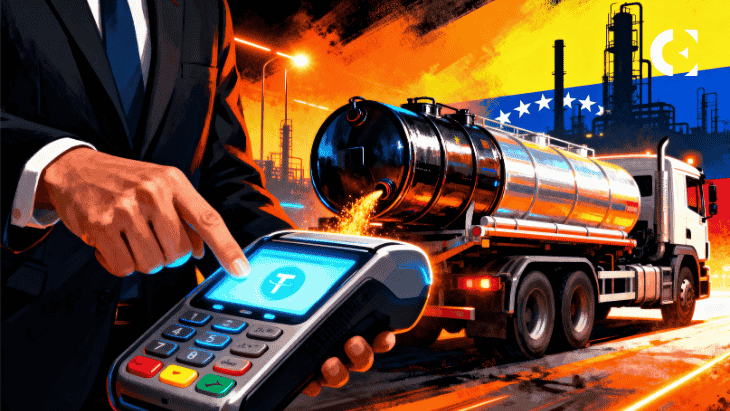
- Venezuela’s state oil firm PDVSA used USDT to settle oil gross sales after US sanctions.
- USDT was additionally used as a civilian forex because the bolivar disappeared as a result of hyperinflation.
- The nation is predicted to carry an enormous stash of 600,000 BTC, however the knowledge stays unconfirmed.
Venezuela turned to USDT after US sanctions minimize off entry to the greenback banking system. Apparently, since 2005, the US has imposed “focused sanctions” in opposition to Venezuelan people and entities for “felony, anti-democratic, or corrupt conduct.”
In accordance with a report within the Wall Road Journal, state oil firm PDVSA has began requiring funds in stablecoins to take care of oil exports.
By 2020, consumers had been required to take care of a cryptocurrency pockets. Oil trades had been settled via direct USDT transfers or via intermediaries that exchanged money proceeds into stablecoins. This fully prevented banks and decreased the danger of foreclosures.
It is very important notice that by one native estimate, virtually 80% of Venezuela’s oil revenues stream via stablecoins.
USDT labored and crypto mattered
USDT is essential as a result of it tracks the US greenback whereas remaining exterior the standard system of implementing sanctions. For PDVSA, this implies quicker settlements, fewer cost blocks and entry to international consumers regardless of restrictions.
For Venezuela, cryptocurrencies weren’t an ideology, however a dependable technique of cost. Even after the financial institution closed, my pockets remained open. The identical logic utilized to civilians.
Hyperinflation has destroyed the bolivar, which has misplaced virtually all of its worth over the previous decade. USDT has develop into a parallel forex for financial savings, remittances, and every day funds.
WSJ reported that stablecoins are actually being built-in into Venezuela’s native economic system. USDT is more and more used for grocery funds, lease, companies, and cross-border remittances. Estimates recommend that by late 2025, cryptocurrencies will account for round 10% of grocery transactions.
Adoptions, then again, came about with out formal regulation. Belief has shifted from native banks to dollar-pegged tokens that may be transferred immediately and saved exterior of capital controls.
Earlier makes an attempt by the federal government to situation a nationwide cryptocurrency, the Petro, failed as a result of it was unreliable and never accepted globally. USDT stuffed that hole.
A stash of 600,000 BTC?
In accordance with earlier experiences, Venezuela holds a large quantity of round 600,000 BTC, value greater than $55 billion based mostly on present costs. Nevertheless, these claims haven’t but been confirmed.
The stash of BTC is believed to have come from the nation’s gold swaps and oil funds between 2018 and 2025. Venezuela exchanged the gross sales proceeds into USDT and BTC to keep away from sanctions.
If true, this important Bitcoin might make Venezuela one of many prime holders of the world’s largest digital asset. For reference, Satoshi Nakamoto has an estimated 1.1 million BTC saved in his pockets.
Associated articles: Venezuela’s hidden Bitcoin might trigger large provide outage
Disclaimer: The data contained on this article is for informational and academic functions solely. This text doesn’t represent monetary recommendation or recommendation of any sort. Coin Version shouldn’t be accountable for any losses incurred because of the usage of the content material, merchandise, or companies talked about. We encourage our readers to do their due diligence earlier than taking any motion associated to our firm.